Large super funds invest in fossil fuel expansion - not ours
In brief
- 29 of Australia’s largest 30 super funds1 are investing in companies expanding fossil fuel production.
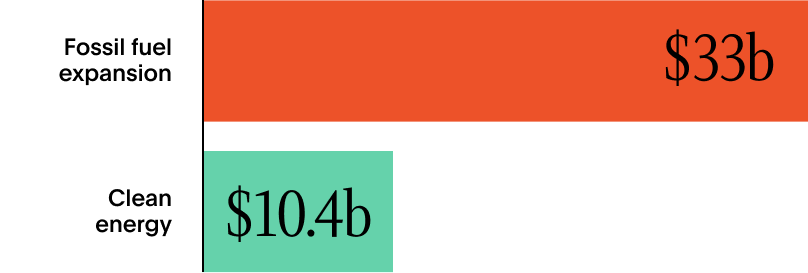
- $33 billion of Australians’ retirement savings is tied up in fossil fuel expansion – three times more than in clean energy, even though performance of a clean energy index has outpaced the fossil fuel expander index over seven years.
Why is it important
Australians’ superannuation could be driving the clean energy transition and supporting stronger long-term returns. Instead, billions are still invested in companies expanding coal, oil, and gas, the latest Market Forces Fossil Fuel Expansion Index report shows. The plans of these companies run counter to global climate agreements and emissions targets. At Australian Ethical we think that redirecting capital toward clean energy isn’t just good for the planet, it’s essential for managing the risk of stranding capital in industries in decline, while building a future worth retiring into.
What’s the Market Forces report about?
Market Forces has companies’ exposures globally and come up with The Fossil Fuel Expansion Index (FFX 200)2 – a global list of 200 companies with the biggest plans to expand coal, oil, and gas. These aren’t marginal players – they’re the companies with the biggest plans to extract coal, oil, and gas, the very fuels the world moving away from to meet global climate targets. They include Australian names like Woodside Energy, Santos, and Whitehaven Coal, alongside global giants.
Market Forces measured the emissions tied to the expansion plans of these companies, and the numbers are staggering. Together, they represent the equivalent of 300 years of Australia’s annual emissions and would consume more than the entire remaining carbon budget to meet the most ambitious objectives of the Paris Agreement. The International Energy Agency has already been clear that limiting warming to safe levels means no new coal, oil, or gas projects3. Yet these companies are pressing ahead, ignoring the science and increasing both climate and financial risk.
The report highlights:
- Clean energy investments have outperformed fossil fuels over seven years4, reinforcing that sustainable businesses deliver better long-term outcomes.
- Most super funds aren’t stepping up. Despite climate commitments, they continue to back companies whose businesses depend on fossil fuel growth instead of investing more in clean energy.
Clean energy exposure
According to the Market Forces analysis, Australian superannuation funds have on average just 2.1% of their share investments in clean energy, compared to 5.7% in fossil fuel expansion. That’s $10.4 billion versus $33 billion5. This imbalance needs to flip if we’re serious about meeting climate goals and protecting long-term returns.
Larger Australian superannuation funds choose companies expanding fossil fuels over clean energy investments
We’re much more focused on where the future is heading
At Australian Ethical, we believe better businesses create better outcomes – for investors and the planet. We have:
- Zero investment in the Market Forces Fossil Fuel Expansion Index.
- 4.1 times the benchmark level6 of renewables and energy solutions revenue in our listed share investments7.
Guided by our Ethical Charter for nearly 40 years, we have always invested to help protect the planet and create long-term value.
While we don’t invest in companies engaged in the biggest fossil fuels expansion – Woodside, Whitehaven Coal, Santos, Origin, and AGL are excluded, for example. We may invest in companies that earn some revenue from fossil fuels, as long as it’s below our limits8 . What matters most is the positive impact they’re making – such as producing renewable energy and helping the transition to clean power.
We don’t see the climate crisis as a distant threat – it’s here, shaping our world today9.
But with risk comes opportunity. Investing in clean energy and solutions that help communities adapt is critical. That’s why we think it’s important to direct capital where it matters most.
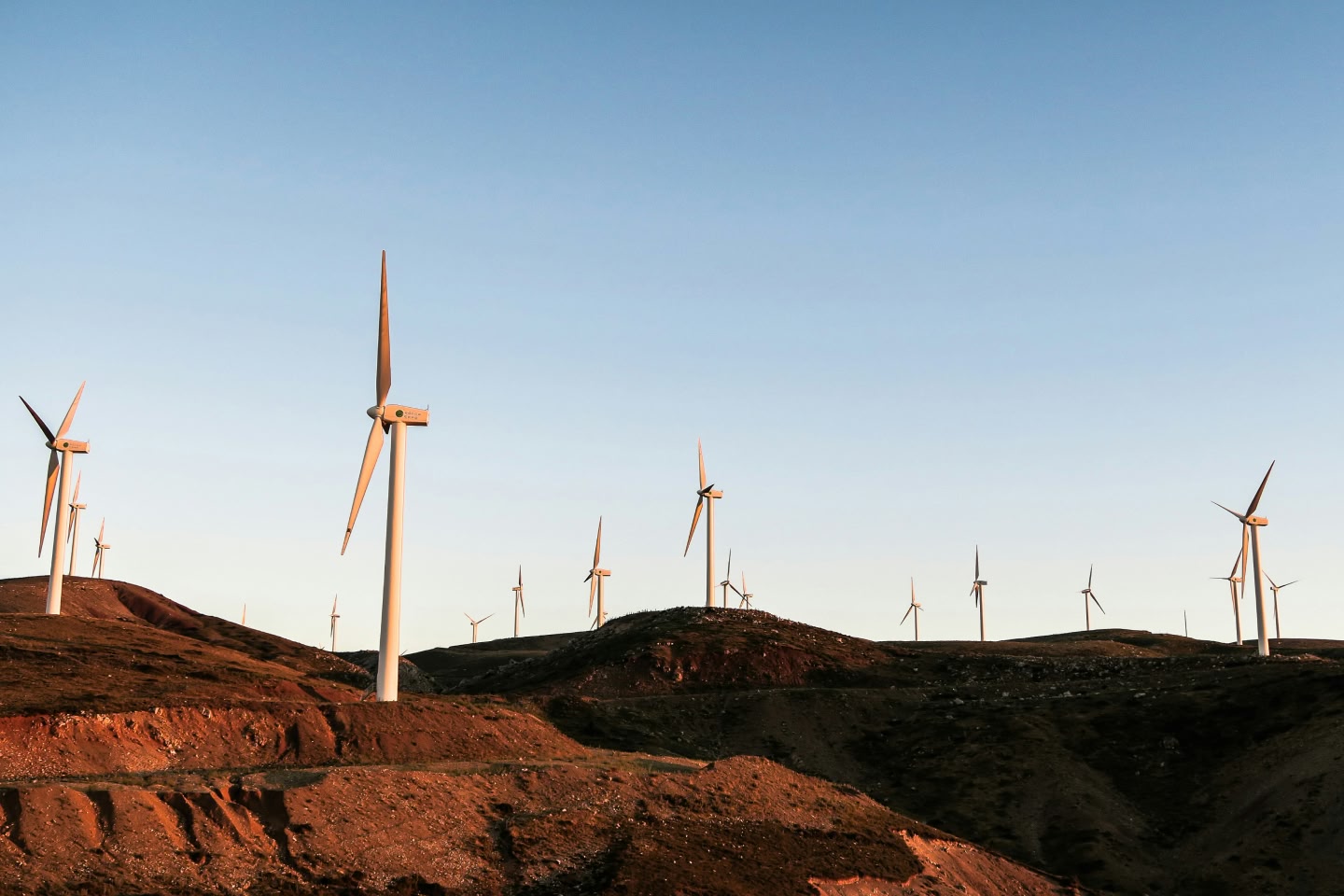
At Australian Ethical, we think that redirecting capital toward clean energy isn’t just good for the planet, it’s essential for managing the risk of stranding capital in industries in decline.
Why collective action matters
The Australian superannuation industry manages north of $4.3 trillion. Where that money flows shapes the economy, and the planet. Redirecting more of that money towards clean energy could accelerate the transition and reduce systemic risk. Every individual choice adds up. Together, we can point companies, economies and the planet in the right direction.
That’s why we don’t just invest ethically - we also engage with companies and governments10 to influence change and direct capital to solutions that matter11. The Market Forces report Fossil Fuel Index is a reminder that the choices we make today - collectively and individually - define the future we retire into.
Your super, your choice
Every dollar invested in fossil fuel expansion accelerates climate risk. Every dollar invested in clean energy helps build a safer, more sustainable world – and a future worth retiring into.
Make sure you’re invested with a fund that directs capital toward companies that are working towards a sustainable long-term future.
Join an award-winning# super for people who want to do well by doing good.
1 Data obtained from Market Forces: The Fossil Fuel Expansion Index, Dec 2025, using the exclusion criteria therein. We do not independently verify all such data and make no representation or warranty as to its accuracy, completeness, or suitability for any particular purpose. You should exercise your own judgment and seek independent advice where necessary.
2 The Fossil Fuel Expansion Index (FFX 200)
4 According to the Market Forces Report research - Clean energy companies achieved more than double (104%) the investment returns of FFX 200 companies over the seven year period November 2018 - November 2025. Major global share indices – the Bloomberg World Index, MSCI World Index, S&P 500 and ASX 300 – and the Bloomberg Goldman Sachs Global Clean Energy Index have all outperformed the FFX 200 over this seven year period. One dollar invested in the FFX 200 in November 2018 would be worth $1.93 today, whereas a dollar invested in the Bloomberg Goldman Sachs Global Sachs clean energy index would be worth $2.90.
5 According to the Market Forces analysis, investments in companies in the Bloomberg Goldman Sachs Global Clean Energy Index totalled just $10.4 billion compared with $33 billion in FFX 200 companies in June 2025. Only 2.1% of super funds’ share investments are invested in these clean energy companies, on average, compared to 5.7% in the FFX 200.
6 Compared to a blended benchmark that best reflects the benchmarks used by the underlying investment strategies. Based on holdings at 30 June 2025 and analysis tools provided by external sources which cover ~74% of the investments we hold by value other than wholesale cash fund and mandates. Both carbon intensity and sustainable impact solutions revenue relate to the listed companies and public corporate fixed income securities in which we invest across our funds and options. This should not be considered representative of individual funds or options which will have their own mix of share and other investments. See our Annual & Sustainability Report for more information.
7 We report on our investments in listed shares and fixed income securities because these comprise a large proportion of our total funds under management (~81.0%), and because data is less readily available across our other investments.
8 Read about our revenue tolerances here. For further information please see section 5.1 and 5.7 of our Ethical Guide.
9 The catastrophic effects climate change is already having on our communities and living standards – and will continue to have if we don't move now to cut emissions – is outlined in the latest Federal Government’s National Climate Risk Assessment report
10 Please see our latest Stewardship Report for detail of our previous and ongoing active engagements stewardship-report-2025.pdf
11 Recent engagements to cut of financing and underwriting to fossil fuel expansion include with NAB, Westpac and QBE Taking on Woolies and Westpac | Australian Ethical, We’re asking QBE to do better | Australian Ethical
# Please refer to our website for the specific awards we have won, including the specific categories
This information is general in nature and is not intended to provide you with financial advice or take into account your personal objectives, financial situation or needs. Before acting on the information, consider its appropriateness to your circumstances and read the Financial Services Guide (FSG), relevant product disclosure statement (PDS) and target market determination (TMD) available on our website. You may wish to seek financial advice from an authorised financial adviser before making an investment decision.
Past performance in not an indicator of future returns.
Investing ethically and sustainably means that the investment universe will generally be more limited than non-ethical, non-sustainable portfolios in similar asset classes. This means that the portfolio(s) may not have exposure to specific assets which over or underperform over the investment cycle, and so the returns and volatility of the portfolio(s) may be higher or lower than non-ethical, non-sustainable portfolios over all investment time frames.
We exclude companies primarily engaged in fossil fuel extraction (coal, oil, or gas) and don’t invest in the FFX 200. However, we may invest in diversified companies that make a positive impact – such as producing renewable energy – if their fossil fuel revenue is below our thresholds. Learn more about our revenue limits here.
Interests in the Australian Ethical Retail Superannuation Fund (ABN 49 633 667 743) (the ‘Fund’) are issued by Australian Ethical Superannuation Pty Ltd (ABN 43 079 259 733, RSE L0001441, ASFL 526 055) (the ‘Trustee’).