
Animal testing: Why we keep pushing
In brief
For the first time, Australia has counted the animals used in research. Here’s what the number tells us, where your investment fits in, and what we’re doing about it.
Why this matters
Your investment gives us a voice that advocacy alone can’t always match – through participation in AGMs, board and management meetings with companies, we use our shareholding and position as an investor to influence.
Who's counting?
Researchers have counted the number of animals used in scientific research across Australia for the first time. In a single year, it was more than 1.1 million mice and nearly 47,000 rats1. That's believed to be a conservative figure because it leaves out animals bred for research but never used, and other species including primates, rabbits, birds, and fish.
Why isn't this changing faster?
In most cases, Australian law doesn’t prohibit animal research, with cosmetic testing the main exception2. Without the right incentives, practices can change slowly.
Where does your investment fit in?
Some of the world's best known consumer brands including L'Oréal SA, Shiseido Company, Procter & Gamble Co, and Unilever remain exposed to cosmetic animal testing, which may be in markets where authorities require or conduct such testing, even if they claim to no longer do their own animal testing. This is something that shows up in our ethical evaluation. Meanwhile, Mindful Investing data shows many super funds still hold shares in these companies.
Where we draw the line
Cosmetic testing is where we hold a firm position. Our investment process is designed to avoid companies that conduct or commission animal research for cosmetic products, including ingredients. Our Ethical Guide has more information.
Broader animal cruelty exposure is harder to avoid entirely. Some companies we invest in may have limited exposure to animal-related activities, such as the sale of caged eggs or use of animal-derived materials. Where we see this in companies we invest in, we may engage them to do better, as we did with Woolworths on its caged egg commitments in 2025.
The grey area
Biomedical research is slightly different in our view. Companies developing medicines, treatments, and vaccines can save lives, and much of that work still involves animal research. We may invest in those companies because there is real benefit to society, and where they satisfy our Ethical Criteria. But we also invest as active owners, using our position to push for faster adoption of alternatives.
Where can we make the most difference?
Universities - they're major centres of animal-based research in Australia and well placed to develop alternatives to animal testing. Through our stewardship work, we've seen that without outside pressure, institutions tend to move very slowly. But we think they will respond to transparency and competitive pressure.
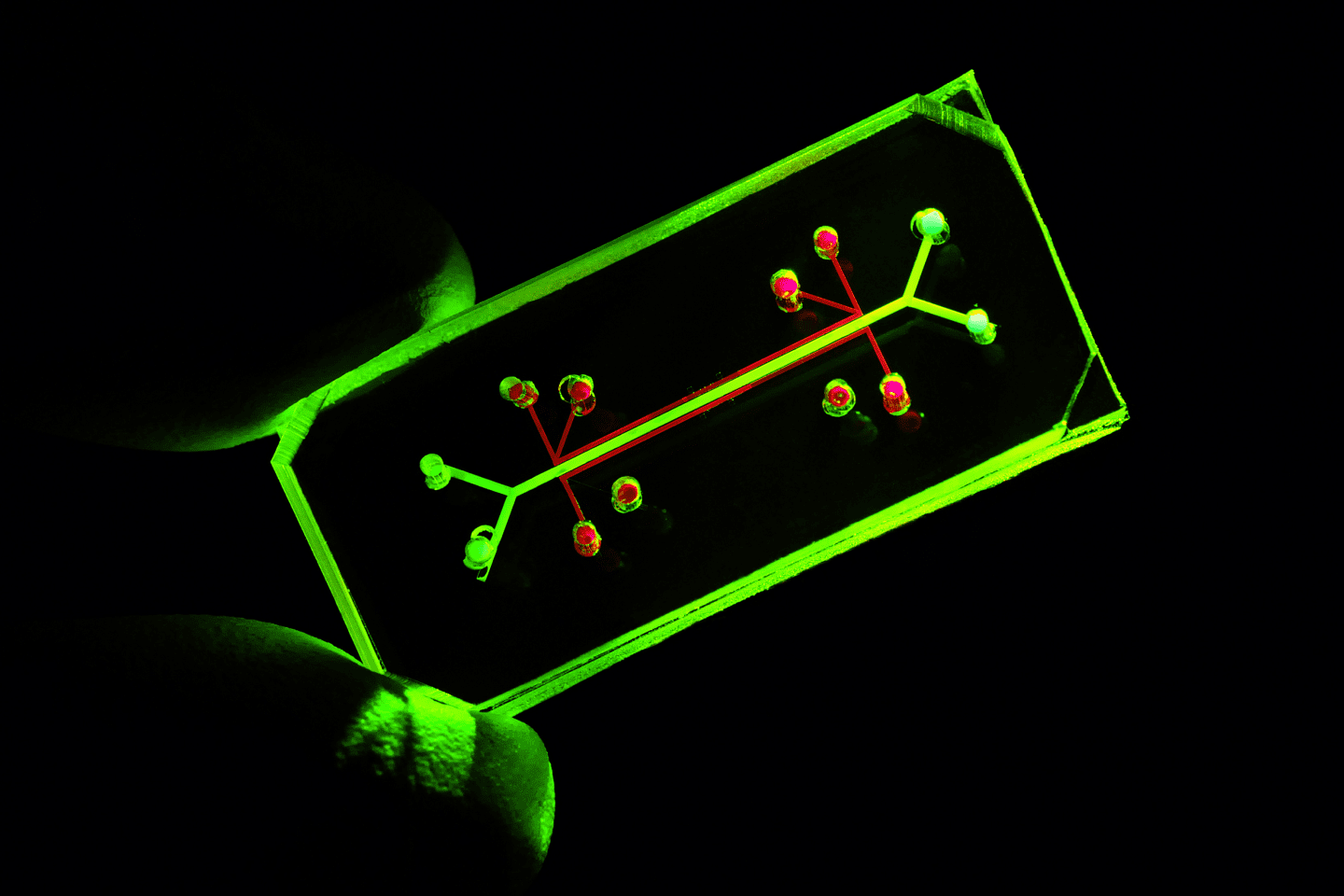
This lung-on-a-chip serves as an accurate model of human lungs to test for drug safety and efficacy.
Credit: Wyss Institute for Biologically Inspired Engineering, Harvard University/Flickr
So we built a benchmark
We believe it's the first of its kind for Australian universities. Developed with input from independent veterinary and animal welfare experts, it looks beyond the regulatory minimum, and into how research proposals are approved, what investment is going into non-animal models, and whether governance structures are creating the right conditions for change. We're piloting it, and the universities we've engaged are responding positively.
What can you do?
If you're studying or working at a university, ask what your institution is doing on the 3Rs: Replace, Reduce, and Refine. The more people ask, the more we think universities are likely to reflect on their own role in the transition away from animals in research.


