
Ethics in action: Year to June 30, 2026
This year, your money continued to push banks to change their fossil fuel policies, advocated for stronger national climate targets, and exited Tesla stock. Here's what happened, and what's coming next.
Stewardship
We use our position as investors to drive real-world change. When change happens in our complex world, it’s hard to identify the precise cause, so rather than claiming credit, we tell you what we did and what happened.
Banks & climate
We’ve long prioritised pressing banks and other financial institutions to reduce financing fossil fuel expansion. Working with Market Forces’ we’ve used shareholder resolutions1 to scrutinise how Australian banks apply their climate commitments to oil and gas financing decisions.
After years of sustained pressure, in December 2025 National Australia Bank (NAB) committed to assessing whether oil and gas clients are capping or reducing hydrocarbon output, which was in line with our asks. NGO research2 also points to a significant reduction in the bank’s oil and gas lending.
We’re pursuing similar outcomes elsewhere. We co-filed our first climate-related shareholder resolution for Macquarie in 2025, which received 35% support. This year we co-filed again and met with the Macquarie Board directly to raise our concerns and propose a better approach. We also worked with Australia's only ethical share trading platform SIX Invest to file a resolution that put climate change formally on the agenda at QBE’s 2026 AGM.
Policy influence
In August 2025, we published an open letter to the Prime Minister calling for an ambitious 2035 national climate target, the culmination of a multi-year project engaging policy makers, investors and corporates. The announced target of 62–70% is more ambitious than what many others group lobbied for, but falls below the Climate Change Authority's consulted range, and what we had advocated for.
Our CEO also wrote to the Western Australian Premier, Treasurer and Minister for Energy and Decarbonisation, urging the state to establish comprehensive interim emissions reduction targets and a clear transition pathway. The letter was endorsed by other investors.
In February 2026, our team joined what is believed to be the first international investor delegation to Indonesia, bringing investor perspectives on climate and nature risk directly to key government decision makers. The fate of Indonesian forests and energy investments will shape both the country’s footprint and the global transition to net zero.
Animal research
Animal research remains a necessary part of developing important medicines, but the animals involved can experience extreme suffering3.
In 2023, Australian Ethical and the Australian Ethical Foundation co-sponsored a CSIRO roadmap to help Australia develop non-animal research models. We then worked to build federal government support for policy asks based on those recommendations. While 27 signatories across the healthcare industry came on board, the university sector didn’t follow, so we pivoted.
We’re now developing an evidence-based benchmark designed to raise ambition in universities on alternatives to animal research. Four universities took part in a pilot and the feedback confirms its potential as a practical tool for change, and a way to support incentives like our CSIRO-informed statement.
We're also engaged in the initial stages of the public consultation on Australia's regulation of animal research, drawing on the CSIRO roadmap’s policy recommendations. Next, we’ll make our own submission and encourage relevant investee companies to do the same, using our influence to build the case for embedding alternatives to animal research in the regulatory framework.
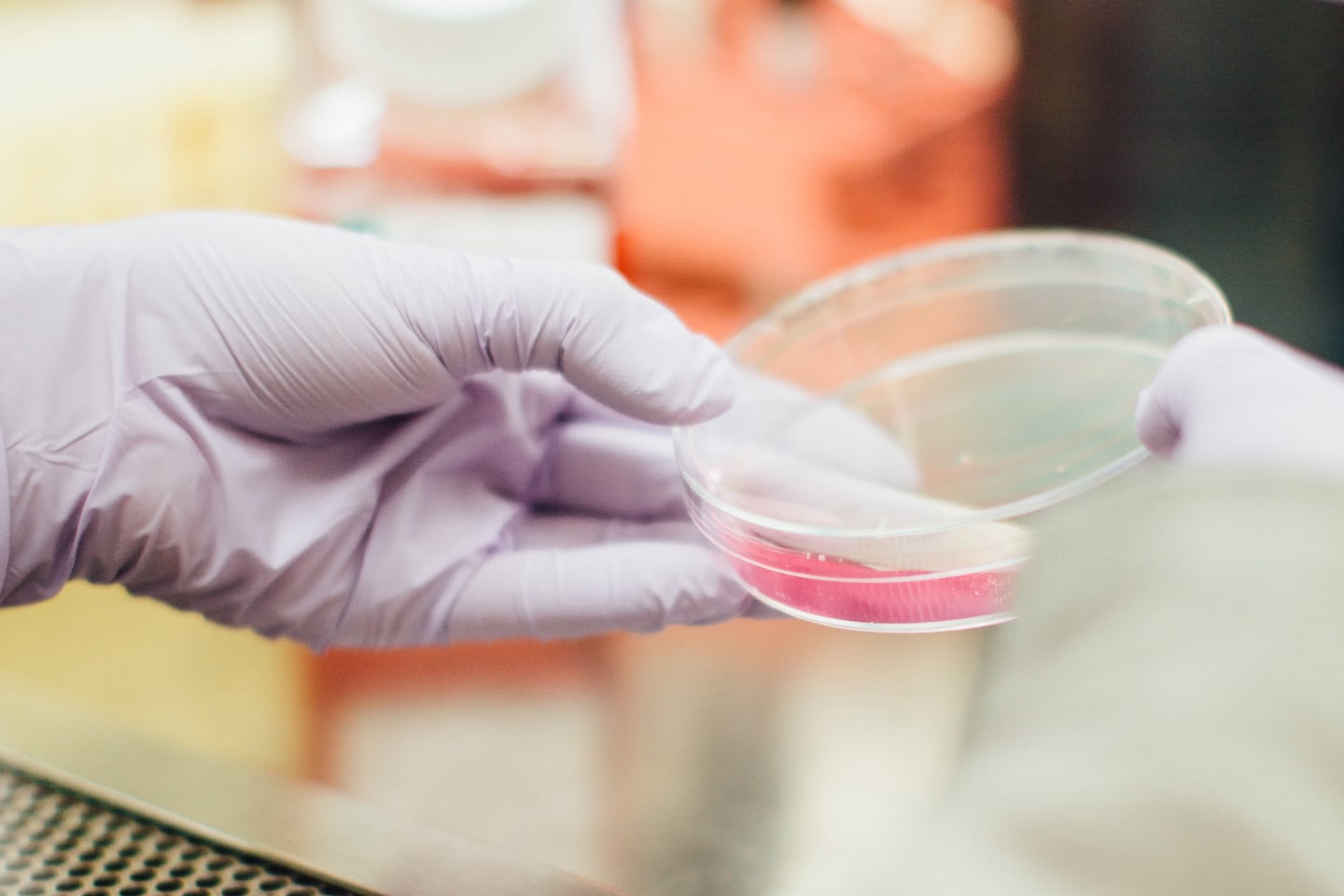
We're developing a benchmark to hold universities to a higher standard and four universities have already participated in the pilot.
Deforestation
Banks and supermarkets have direct leverage over how their customers and suppliers contribute to the destruction of native forests4. This year we co-filed a shareholder resolution with NAB calling for the bank to disclose its exposure to financed deforestation. Alongside the Australian Conservation Foundation, we briefed other institutional investors on why we believe NAB needs to act.
When Westpac quietly walked-back their no deforestation commitment in December 2025, we engaged directly and questioned them publicly at their AGM. To extend this pressure, we launched a collaboration initiative on the PRI platform, encouraging other investors to engage with Australian banks on the issue.
On the supermarket side, Coles announced a no deforestation commitment in August 2025, which meant both major Australian supermarkets had ‘no-deforestation’ commitments that applied to Australian beef. But commitments only matter if they are upheld. When Woolworths appeared to walk back their commitment by saying Australian beef was not high risk for deforestation, we pushed back through collaborative engagements, direct enquiries, and public questioning at their AGM.
Ethical assessments
Our ethical assessments determine the companies we can invest directly in. Separately, each fund determines the investment strategy then shapes the actual portfolio. We may choose not to invest in an ethically approved company, but we won’t invest directly in companies that don’t meet our assessment criteria.
A sample of investments we’ve ethically approved, removed from our investable universe, or directly divested from is shown below.
| 1. Transition minerals |
|
|---|---|
|
Transition minerals support the production of clean energy, including copper for electrification, lithium for batteries. We assess each company not just on what they produce, but how they operate. In the past year we approved four companies across the transition minerals space.
|
|
| 2. Renewable energy & battery storage |
|
|
In our view, these assets represent the direct investment in the infrastructure the energy transition needs. These are unlisted investments added to our approved list:
|
|
| 3. CATL (Contemporary Amperex Technology Co) |
|
|
Our first China-listed ethical approval. 100% of revenue from EV battery and battery storage technology, directly enabling the shift to low-emissions transport. Market leader in long-life, long-range batteries for both passenger and heavy-duty vehicles. |
|
| 4. Gold |
|
|
We are highly selective investors in extractive industries, only approving where we see benefits clearly exceed the inevitable impacts of mining. While gold’s social and environmental extraction costs remain, it is playing a growing role in an era of heightened geopolitical instability, offering an alternative to government issued (fiat) currencies. As the US and other governments show increasing disregard for the economic and social impacts of their actions, USD currency and bonds are becoming a less reliable reserve currency. The sustained rise of gold in central bank reserves reflects this. By offering an alternative to fiat currencies, gold can strengthen accountability for government policy. Given this shift, we will now invest in Gold producers that meet our stringent environmental and social standards, as well as in gold commodities and derivatives. |
|
| 1. Fortescue |
|
|---|---|
|
We continue to have concerns about its treatment of Traditional Owners. This year, a legal decision required the company to pay $150 million in compensation to Traditional Owners. A separate class action has since been commenced over alleged discrimination against female employees and failure to prevent sexual assault. We apply a dual test in our ethical assessments: positive activities and responsible conduct. The decision to leave Fortescue stock out of our investable universe was always about the second. The legal developments confirm our position. |
|
| 2. Tesla |
|
|
A unanimous decision by the Ethical Review Committee. Elon Musk's dual role as Tesla CEO and Head of DOGE created serious conflicts of interest that undermined regulatory independence. Product safety management weakened. Labour rights violations, including active suppression of unionisation remained unresolved after proxy voting at six AGMs since 2019. |
|
| 3. Hutchinson Port Holdings Trust |
|
|
98% of revenue from ports, a genuine positive for efficient transport infrastructure. But insufficient evidence of adequate human rights due diligence or grievance or remediation mechanisms for its workforce and supply chain. |
|
| 4. Cogent Communications |
|
|
Carries approximately 25% of all global internet traffic. Heavily reliant on energy-intensive data centres the company itself says so. No meaningful effort to address the environmental impact of its data centres. |
|
| 5. Saluda Medical |
|
|
Saluda Medical came to market with spine stimulation therapies we couldn't support due to insufficient evidence of genuine clinical benefit beyond a placebo effect. The company is now trading at around a fifth of its IPO price. |
|
1 A shareholder resolution is a formal proposal that investors put to a company board, voted on at an annual general meeting. It’s one of the most direct tools investors have to push for change
2 https://publications.marketforces.org.au/link/966615/19/
3 Where alternatives exist, they're often faster, cheaper and produce more human-relevant science. The challenge isn’t so much the science, it’s the commercial, institutional and regulatory barriers that are stalling the transition toward alternatives. The moment to act on those barriers is now. Australia's Code for the Care and Use of Animals for Scientific Purposes – the mandatory ethical framework for research on live non-human vertebrates and cephalopods – is under review for the first time since 2013. At the same time, the US, UK and EU are actively moving to phase out animal testing, creating growing pressure on Australia to keep pace.
Our strategy works on two levels: ethical screening and engagement to push healthcare companies and universities to genuinely implement the 3Rs (replace, reduce, refine), and stewardship to advocate for the regulatory and policy conditions that make alternatives viable.
4 Australia is the only developed country considered a global deforestation hotspot. In Queensland alone, the latest government figures revealed that bulldozed habitat (332,015 hectares) equalled more than ten times the forest area palm oil companies destroyed in Indonesia in the same year (https://wilderness.org.au/news-events/new-queensland-government-data-reveals-disastrous-deforestation-continues-to-soar). Banks and supermarkets have unique leverage to address this destruction. As an investor in both, so do we. Over the past year we've been using that leverage to push them to adopt stronger policies and targets on deforestation.


