
We were in Canberra advocating for what matters
In brief
Australia's industrial pollution rules are being rewritten right now, and the decisions made will shape this country's emissions trajectory for the next decade. That's why we were in Canberra making sure the people writing those rules hear from the investors like us who are investing in the future.
Why this matters
Engaging governments is one part of a bigger connected effort. Alongside our direct engagement with companies, and collaboration with other investors and stakeholders, we are pushing to keep climate ambition anchored to what the science demands, even if political support fluctuates. Your investment is what puts us in that room and keeps the pressure from slipping.
The world feels uncertain – here's what we're doing about it together
Energy bills that keep climbing; extreme weather that doesn't feel so extreme anymore; a global scramble over energy supply that's making it very tempting for governments to quietly walk back the climate commitments we've fought hard to win.
This is when climate policy can slip, not in the media headlines for everyone to see, but quietly, as loopholes widen and ambition gets traded for short-term relief.
We're working hard to make sure that doesn't happen.
We were just in Canberra
Over two days in August, our team met with senior officials across climate, industry, and economic policy departments, as well as ministers and cross-party parliamentarians from across the political spectrum.
Our message was consistent throughout: strong, predictable climate policy makes Australia an attractive destination for long-term investment. We're not just making an environmental argument; it's also an economic one.
What makes Australian Ethical different from other more mainstream investment firms isn't just what we do and don't invest in, it's also what we do with the weight of your collective investment. We use it to push companies, investments, and yes, governments to increase their ambition.
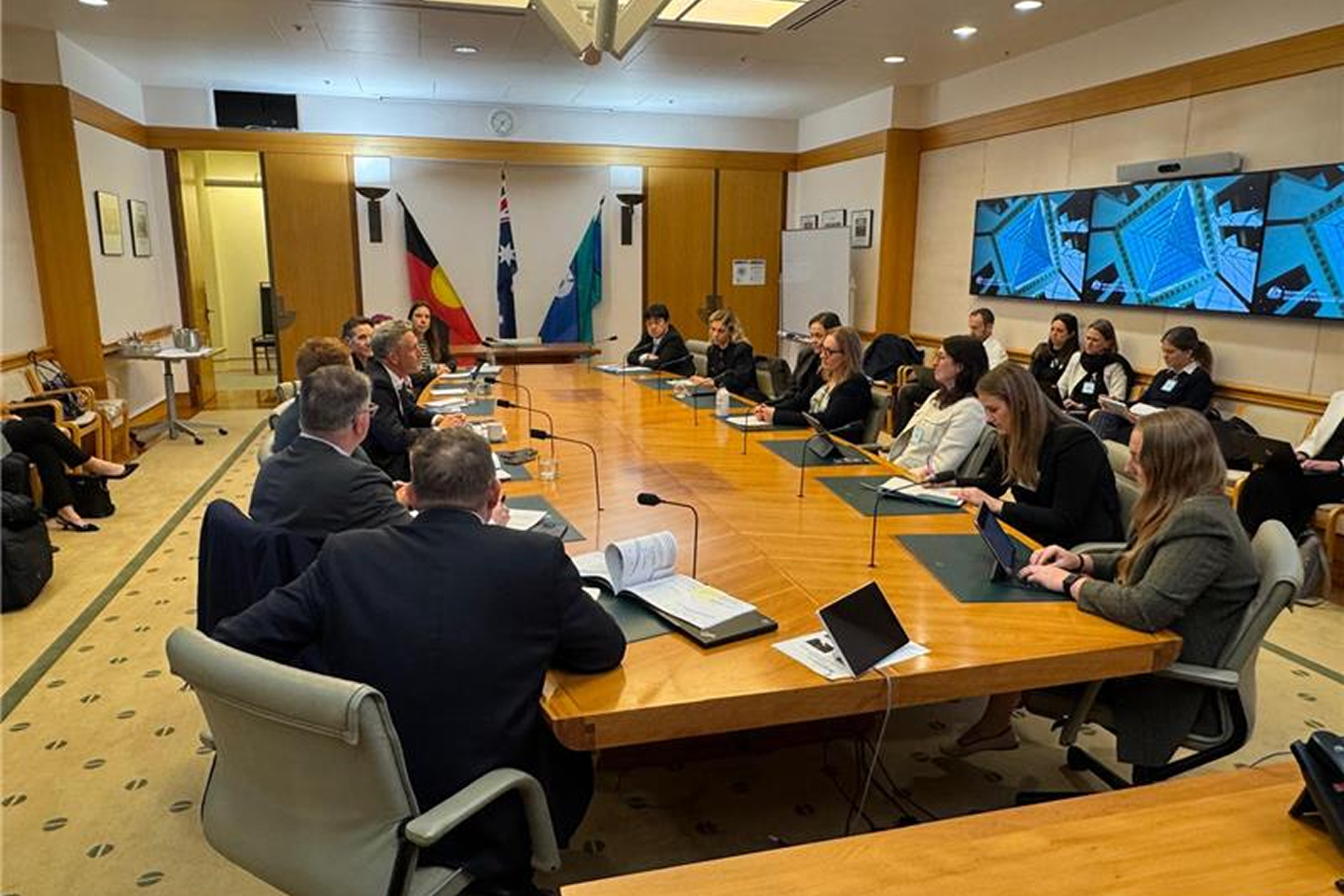
Persephone Fraser, Australian Ethical Ethical Research and Policy lead, pushing for more ambitious climate policy.
Why should you care?
Where you invest your money can help influence the transition. We are asking for limits on heavy emitters that tighten over time, and for companies to be incentivised to bring down emissions onsite. These are the things that turn government targets from aspiration into reality.
An orderly climate transition is the lowest-cost future available to us1. Delay it, or paper over it with accounting tricks, and the costs increase, coming back as economic disruption, physical damage, and volatile markets2. Markets that could impact long-term returns which everyone’s retirement depends on.
Strong, predictable climate policy makes Australia an attractive destination for long-term investment. We're not just making an environmental argument, it's also an economic one.
Acting on climate and protecting your financial future are the same goal
Right now, we're in the middle of what we believe is one of the most consequential climate policy debates Australia will have this decade – one that flows from the Paris Agreement3 through to the national emissions targets we lobbied for last year.
The question on the table: will we see a policy that pushes Australia's biggest industrial emitters to actually reduce their carbon pollution, or will they be allowed to offset and delay in a way that sounds like progress but isn't?
Australia's 219 largest industrial facilities across mining, gas, manufacturing and transport account for around 31% of this country's total greenhouse gas emissions4. The rules governing what they can emit are up for review, and the decisions made now will shape our emissions trajectory for the next decade.
This policy is known as the Safeguard Mechanism. Whether you've heard of it or not, what happens to it will shape the future of the Australian economy in this critical decade for decarbonisation, and ultimately the environment your super is invested in.
On the Safeguard Mechanism specifically, we're pushing for three things:
- Emissions reductions under the scheme are made to be ambitious
- Fossil fuel extraction faces stricter limits than industries actively working to decarbonise
- Emissions are actually coming down at these facilities, not just being offset
What gives our voice weight in these conversations in the offices of Ministers and around the tables with groups and lobbyists is the investor lens we bring; this includes insight from the companies we back, the capital we deploy, and what credible climate policy actually means for they kind of world you will retire into.
Strong, predictable climate policy makes Australia an attractive destination for long-term investment.
What this means for how we invest
Strong climate policy sends a clear signal to investors everywhere that Australia is serious about reducing emissions, and the businesses building a cleaner economy have the backing they need.
More investors commit, more money flows into clean technology and renewables, and the transition accelerates. For you, that means more opportunities and greater confidence in where we invest on your behalf.
Your membership is doing more than you think
This advocacy is only possible because of the collective weight you and every other member have entrusted to us. That weight is what gets us into the room and what allows us to engage with government on behalf of Australians who chose to invest for the long-term and for a better world.
1 According to Treasury modelling (Australia’s Net Zero Transformation: Treasury Modelling and Analysis) a disorderly approach to the energy transition will cost investment, jobs and the economy. Under the Disorderly Transition Scenario, the economy is projected to be up to a cumulative $2 trillion smaller by 2050, compared to orderly scenarios. Real wages are projected to be up to 4.0 per cent lower in 2050 leading to lower participation and employment. It also states the economic costs to Australia of not pursuing net zero would be significant and consequential and exceed those modelled in the Disorderly Transition Scenario.
2 Australia’s latest 2025 National Climate Risk Assessment Report (National Climate Risk Assessment | Australian Climate Service Website) documents the frequent and more intense extreme events already affecting the way of life in different ways across Australia – from impacts to sport and recreation, to unreliable infrastructure, like energy sources during heatwaves. There will be additional pressure on emergency responders and defence resources. Increased severe floods and bushfires will degrade water quality, placing pressure on already limited water sources.


