
Infrastructure Debt Fund
The Australian Ethical Infrastructure Debt Fund (the ‘Fund’) returned 2.1% net of fees for quarter, delivering +1.1% outperformance against the benchmark return of 0.9%. Performance was driven predominantly by income from its underlying loans and securities. During the period, the RBA’s Cash Rate Target also rose 50bps to 4.1%. The Fund’s portfolio currently consists of direct and indirect exposure to 45 underlying projects in total.
The Fund has a specific objective of supporting Australian projects that aims to contribute to social and environmental change alongside a financial return. Over the quarter to December 2025, assets within the portfolio generated over 350,000 megawatt hours of clean energy and helped avoid over 145,000 tonnes of carbon emissions. This is the equivalent to powering more than 250,000 households over the period.1
Over the quarter, average wholesale electricity prices in the National Electricity Market (NEM) were $73/MWh. The quarter saw strong growth in renewable and storage output, with renewables supplying 48% of the total electricity demand in the NEM. Batteries have asserted themselves as the dominant pillar of the generation mix. Batteries now outcompete gas in providing the evening peak supply and have driven the peak prices down2. Spot prices for Large Generation Certificates (LGCs) also continued to trend downward, trading below $3/LGC. The decline was primarily driven by new renewable supply coming online and reduced demand from voluntary surrender participants. As the NEM continues to transition away from fossil-fuel generators, we expect energy prices to be both volatile and low, and as such reflect this in our debt sizing and loan management.
Overall, the portfolio continues to perform within expectations, with no credit downgrades. Two loans are currently breaching their covenants (early warning flags) due to lower electricity and LGC prices. As such, these borrowers have agreed to de-risk their loans through debt paydowns and to fund battery storage projects to capture low day-time electricity prices and high evening prices, to ensure they continue to repay on time with no arrears.
Infrastructure Debt Fund Performance (net of fees)
As at 31 March 2026
| fund | RBA Cash | Excess Returns | |
|---|---|---|---|
| 1 month | 1.0% | 0.3% | +0.7% |
| 3 months | 2.1% | 0.9% | +1.1% |
| 6 months | 3.7% | 1.8% | +1.9% |
| 1 year p.a. | 7.6% | 3.8% | +3.8% |
| since inception | 7.4% | 4.1% | +3.3% |
Past performance is not a reliable indicator of future performance.
New investments
The Fund did not commit to any new investments this quarter.
| Investment statistics | Portfolio loans | Duration (yrs) | Effective maturity (yrs) |
|---|---|---|---|
| Current portfolio | 21 | 0.4 yrs | 2.8 yrs |
Project updates
- As mentioned, there are currently two borrowers in breach of loan covenants due to lower merchant solar and LGC prices, with borrowers agreeing to derisk the loan facility through additional loan repayments, funding co-located battery storage, and restrictions on distributions to equity investors.
- The Fund is also in the process of exiting one of its Distributed Energy Resources loans, which remains largely undrawn. Due to the Commonwealth Government’s Home Battery Scheme, installers have prioritised customers who purchase systems outright, rather than through asset financing solutions such as those offered by the borrower, and as such, the borrower is likely to be repaid early.
- All projects within the portfolio are in the operating phase, except for the Fulham Solar Hybrid project and and two sub-5 MW hybrid solar farms in the Prime Renewables portfolio.
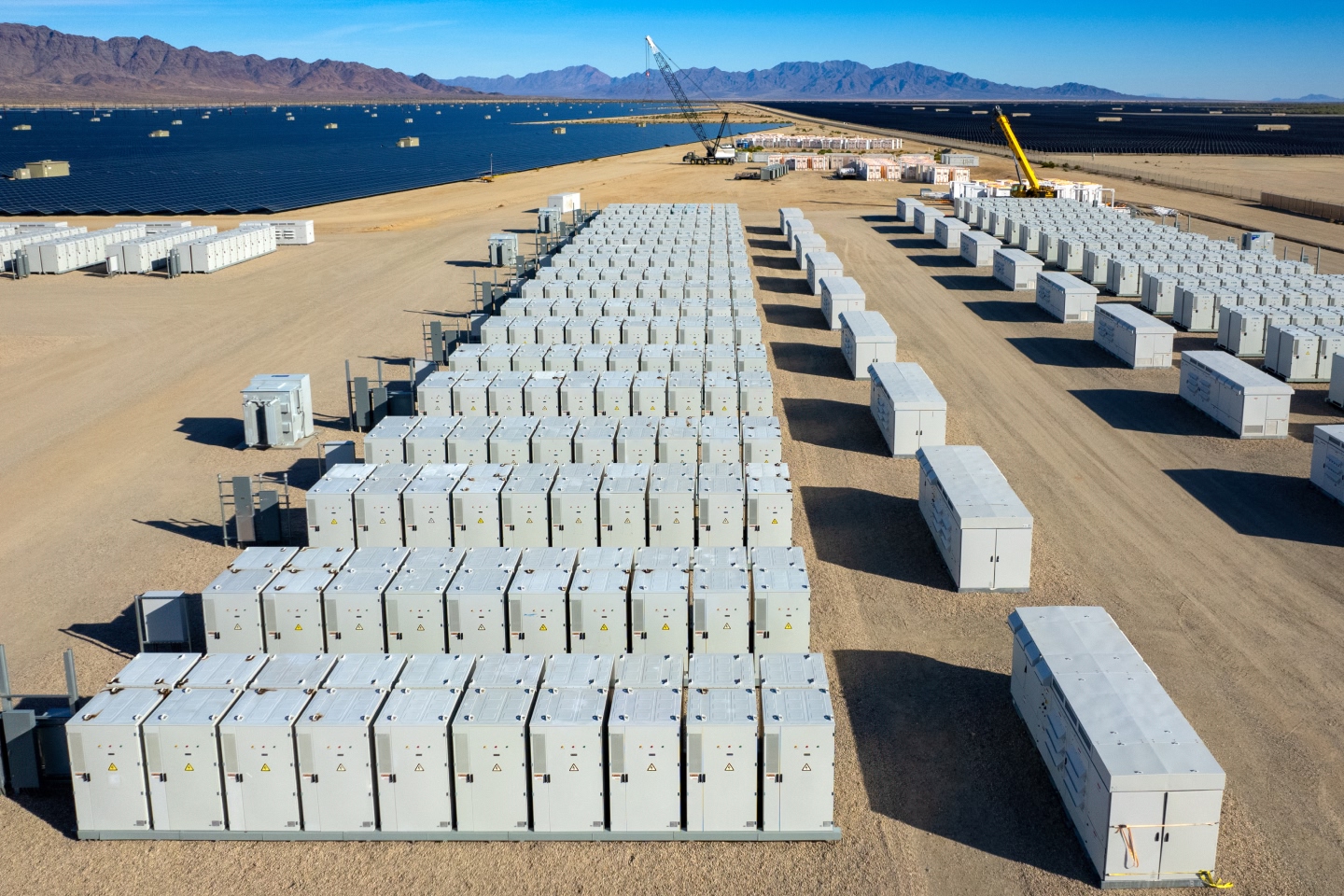
Batteries now outcompete gas in providing the evening peak supply and have driven the peak prices down, according to National Energy Market (NEM) data.
Over the quarter to December 2025, assets within the portfolio generated over 350,000 megawatt hours of clean energy and helped avoid over 145,000 tonnes of carbon emissions.
Investments in the portfolio
The Fund consists of a portfolio of loans including:
- Bright Energy Investments Portfolio. A portfolio of three renewable projects in the Western Australian (Greenough River Solar Farm 40MW, Warradarge Wind Farm 180MW, and Albany Grasmere Wind Farm 35.4MW).
- Yarranlea Solar Farm. A 134 MW solar farm in Yarrenlea, Queensland (50km west of Toowoomba).
- Sentient Solar Asset Fund Portfolio. A portfolio of three solar farms throughout Australia (Swan Hill Solar Farm 19.3 MW, Chinchilla Solar Farm 19.9MW and Brigalow Solar Farm 34.6MW).
- RELA. Portfolio of renewable concurrent leases in NSW and Queensland.
- Dulacca Wind Farm. A 181MWac wind farm in Drillham, Queensland (30km west of Miles).
- Ark Energy NT Solar Portfolio. A portfolio of five solar farms in the Northern Territory (Utene Solar Farm 4.1 MW, Yulara Solar Farm 1.8MW, TKLN Solar Farm - Lake Nash 272KWac, TKLN Solar Farm – Ti Tree 323KWac, TKLN Solar Farm – Kalkarindji 408KWac).
- Royal Women's Hospital. Australia’s first and largest specialist public hospital dedicated to improving the health and wellbeing of women and newborns, located in Parkville, Victoria.
- Bouldercombe Battery. A 50MW/100MWh stand-alone battery energy storage system in Rockhampton, Queensland.
- Darwin Convention Centre. The Northern Territory’s largest conference and event facility, catering for up to 1,200 delegates.
- New South Wales Schools 2. A portfolio of ten schools across New South Wales. The schools include seven primary schools, two high schools and one special needs school.
- GTL Renewables. A portfolio of over 2,000 solar and battery power purchase agreement (PPA) systems located across the east coast of Australia. Under the PPA arrangements, solar and battery equipment is provided to households for a fixed monthly fee over 10 years, with the option for customers to make their home batteries available for grid load balancing and stabilisation services.
- GGP Solar Hybrid Portfolio. A portfolio of three hybrid solar and battery projects (two operating, one in pre-construction) with a combined solar capacity of 15MW and 15MWh of battery capacity.
- Green Square Energy Trust Portfolio. A portfolio of behind-the-meter solar PPAs with commercial and industrial users across Australia, as well as two solar farms, 3.6 MWac Chillamurra Solar Farm in Queensland and 5.0 MWac Cosgrove Solar Farm in Victoria.
- Fulham Solar Hybrid. A hybrid 107MW solar farm coupled with a 78MW two-hour battery energy storage system located in Fulham, Victoria.
- Prime Renewables. A portfolio of five operating wind projects and five hybrid solar-battery projects throughout Victoria.
- National Renewable Network. Portfolio of residential behind-the-meter solar and battery solutions throughout Australia.
- Evie Networks. Australia’s largest electric vehicle DC fast-charging network with a network of over 1,000 charging bays across more than 320 sites throughout Australian.
Portfolio holding weights
| Investment | Weight (%) |
|---|---|
| Fulham Solar Hybrid | 14% |
| RELA | 11% |
| Yarranlea Solar Farm | 10% |
| Prime Renewables | 8% |
| Bright Energy Investments Portfolio | 7% |
| Cash | 7% |
| Bouldercombe Battery | 6% |
| Sentient Solar Asset Fund Portfolio | 6% |
| AE Altuis Credit Income Fund | 5% |
| Green Square Energy Trust Portfolio | 5% |
| GTL Renewables | 5% |
| GGP Solar Hybrid Portfolio | 4% |
| Evie Networks | 3% |
| Ark Energy NT Solar Portfolio | 3% |
| Royal Women's Hospital | 2% |
| Australian National University | 1% |
| Darwin Convention Centre | 1% |
| National Renewable Network | 1% |
| New South Wales Schools 2 | 1% |
| IMA Interest Rate Hedging Assets | 0% |
| AE Income Fund | 0% |
| Other assets and liabilities | 0% |
1. Reported figures are at the asset level and do not reflect the Fund’s proportional exposure to each project via debt financing, as projects may be funded through a combination of debt and equity. It is also assumed the average residential customer consumes 5.5MWh of electricity a year. Data lags the fund reporting period by 3 months.
Interests in the Australian Ethical Managed Funds are issued by Australian Ethical Investment Ltd (ABN 47 003 188 930, AFSL 229949), the Responsible Entity of the Australian Ethical Managed Funds.
The information is of a general nature and is not intended to provide you with financial advice or take into account your personal objectives, financial situation or needs.
Before acting on the information, consider its appropriateness to your circumstances and read the Financial Services Guide, relevant Product Disclosure Statement, Target Market Determination and Information Memorandum available on our website.
You may wish to seek financial advice from a licensed financial adviser before making an investment decision.
Past performance is not a reliable indicator of future performance.
Investing ethically and sustainably means that the investment universe will generally be more limited than non-ethical, non-sustainable portfolios in similar asset classes. This means that the portfolio(s) may not have exposure to specific assets which over or underperform over the investment cycle, and so the returns and volatility of the portfolio(s) may be higher or lower than non-ethical, non-sustainable portfolios over all investment time frames.
The information contained in this document is believed to be accurate at the time of compilation.
This document may contain material provided by third parties derived from sources believed to be accurate at its issue date. While such material is published with necessary permission, the Australian Ethical accepts no responsibility for the accuracy or completeness of, nor does it endorse any such third party material. To the maximum extent permitted by law, we intend by this notice to exclude liability for this third party material.
The Australian Ethical Infrastructure Debt Fund is managed by specialist investment manager Infradebt Pty Ltd who has agreed to be included in the commentary.